
Biju Dharmapalan
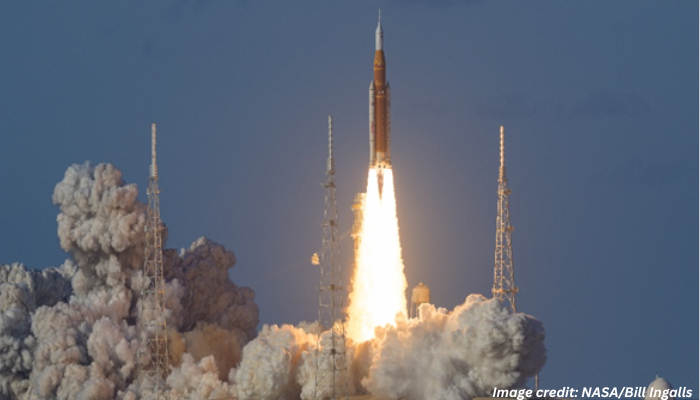
When Neil Armstrong and Buzz Aldrin became the first humans to land on the Moon in July 1969, many assumed it was only the beginning and that people would soon be living and working in space. On July 16, 1969, Armstrong, along with Edwin E Aldrin, Jr, and Michael Collins, blasted off in the Apollo 11 vehicle toward the Moon. Four days later, at 4:17 pm US Eastern Daylight Time (EDT), the Eagle lunar landing module, guided manually by Armstrong, touched down on a plain near the southwestern edge of the Sea of Tranquillity (Mare Tranquillitatis). At 10:56 pm EDT on July 20, 1969, Armstrong stepped from the Eagle onto the Moon’s dusty surface with the words, “That’s one small step for [a] man, one giant leap for mankind” (In the excitement of the moment, Armstrong skipped the “a” in the statement that he had prepared). Armstrong and Aldrin left the module for more than two hours and deployed scientific instruments, collected surface samples, and took numerous photographs. They leave behind an American flag, a patch honouring the fallen Apollo 1 crew, and a plaque on one of Eagle’s legs. It reads, “Here men from the planet Earth first set foot upon the moon. July 1969 A.D. We came in peace for all mankind.” …read more on NOPR

Please bookmark the new web address.