
J Kaur, S Bharti, N Bhattacharya, M Kaushik, K Aggarwal
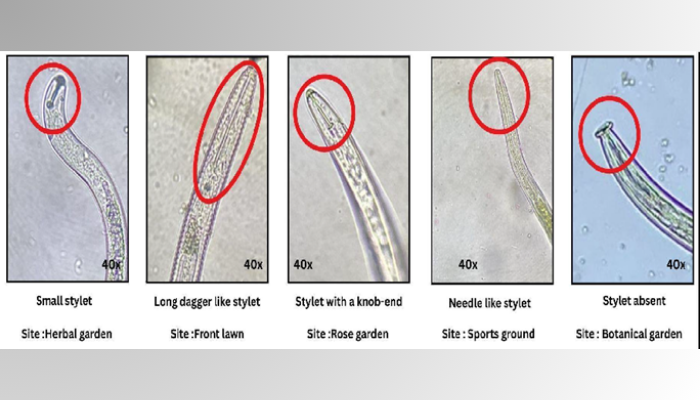
From the title, you might have guessed the organisms being discussed and wondered if these educators are soil bacteria. Here, we refer to another group of microscopic “educators” present in the soil — tiny nematodes (Greek: “thread-like”), which include both free-living and parasitic forms. They represent the most abundant metazoans and the unseen majority beneath the soil, and are a highly diverse group of organisms. They are commonly referred to as roundworms and inhabit a wide range of habitats, including deserts, oceans, grasslands, etc. The recently discovered (2025) nematode species Crassolabium dhritiae, named in honour of Dr Dhriti Banerjee, Director of the Zoological Survey of India (ZSI), highlights the rich yet understudied biodiversity of nematodes in certain regions. As EO Wilson famously stated, “nematodes are so abundant that even if all other solid matter were removed, the Earth’s structure could still be traced in these tiny worms — an illustration of their ecological omnipresence” …read more on NOPR

Please bookmark the new web address.