
Parul R. Sheth
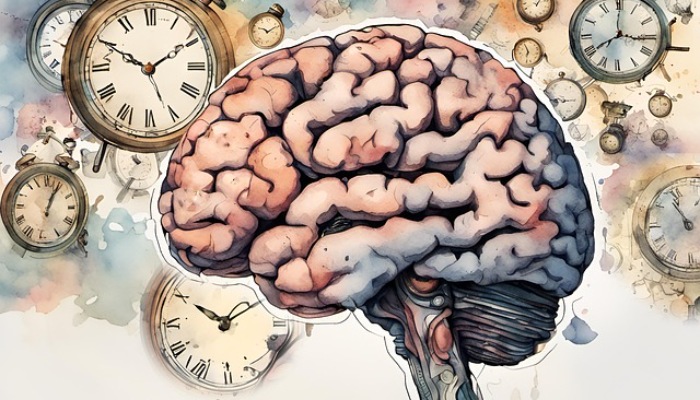
This is a heart-rending account of the mental state of my neighbour, whom I knew for many years. A medical doctor by profession, she was the most sought-after general practitioner in our locality. Literally a genius, she could talk about anything and everything under the Sun. All was well until the time she started to get forgetful. Being a doctor herself, she knew something was happening with her. An early onset of dementia set in while she was in her late 50s.
It is hard to probe deep into the minds of people with dementia. The most frustrating part was that aunty was aware of her condition — Alzheimer’s Disease (AD), the most common cause of dementia. She was frightened, especially when her memories began to fade away. It surely was not related to the normal ageing process. Slowly and steadily, as the disease advanced, her communication skills failed. And at this point, it became difficult for people close to her to decipher whether she was able to process what they talked to her. With time, she stopped communicating about her feelings. She had entered into the no man’s land of ‘Alzheimer’s’. Chaos and confusion had become a part of her. Imagine wandering away in an alien setting with no landmarks and no recognisable faces or familiar sounds! You are alone and exasperated; unsure of what to do next.
The Sequence of Episodes
No two individuals with Alzheimer’s have similar experiences, and yet there can be some common behaviours. The time frame of forgetfulness and cognitive impairment can vary. Experts describe AD as a continuous process, beginning with a symptomless period, moving towards mild cognitive damage leading to dementia that can progress from being mild to moderate to severe. This includes loss of memory, judgement and reasoning; not being able to find the right words, or remembering to do certain tasks or forgetting on an instant the tasks that have already been completed. There comes a time when the person stops recognising the surroundings or familiar people.
My friend Rekha’s dad expressed that he was confused all the time. He knew there was something in him that was changing and was not getting any better. Following a physical and mental check-up and umpteen visits to the doctor, he realised that these changes are going to worsen with time and that neither he nor anyone else is in a position to stop what’s happening, and that’s what hit him hard.
It is a mystery to know what the affected individual is thinking or experiencing. The person could be totally unaware of the disease or be unable to accept the disease (anosognosia), and yet it is not denial. Conversations with individuals experiencing dementia have revealed that as the disease advances, their communication skills fail. You have no way of knowing what goes on in their minds. The advancement of the disease is gradual, but luckily humans are very adaptive. Not knowing what “biryani” tastes like becomes the new normal for the person. The mind works hard to remember, but there is a blank slate in front.
Alzheimer’s changes the whole brain. The neurons, cells in a normal brain, communicate and transmit energy between different parts of the brain and through neural pathways from the brain to the muscles and organs in the body. When dementia hits, the neurons in the brain deteriorate over time and eventually die. There is tissue loss in the whole brain. The result is a shrunken brain that affects all its functions. This neurodegeneration influences memory, physical movement, emotional regulation, decision-making, and so on.
Can anything be done?
The book entitled “Somebody that I used to know” was penned by Wendy Mitchell at the age of 58 when she was diagnosed in 2014 with early-onset AD. She came up with this beautiful memoir, writing about her experience of losing herself. She protests against the system by which she feels abandoned: “There is no follow-up after diagnosis. There is nothing they can do”.
“The Father”, a 2020 psychological drama film directed by Florian Zeller, depicts the plight of a father suffering from dementia, for which 83-year-old actor Anthony Hopkins received the Academy Award for his role in the “Best Actor” category. The film places us in the mind of someone who is losing his mind. The man is trying to rationally explain to himself and those around him what he’s experiencing. His world has shifted; he remains silent, knowing that any questions he will raise will only fall on deaf ears. A whole gamut of emotions runs through his mind, from fury to outrage and his longing for his long-lost mother like a little child.
The dependence of people with AD becomes huge with time. If you are a caretaker, your role turns crucial. This is because, eventually, they will need more help even with simple everyday tasks like bathing, grooming and dressing. If you happen to be around your loved one who is engulfed with the disease, depression may overtake your mind as well. It is hard to witness the plight of the person with AD as the disease progresses. What’s important is to be gentle and respectful. You may get impatient and anxious, but remember it is the disease that’s causing the changes in the person.
The treatment panorama for AD in 2026 is as diverse as ever. Animal research is showing hope of AD reversal. Several other research studies on AD are underway, and yet patients’ perspectives are ignored. It is important to understand the affected person’s mental turmoil starting from the early stage to the final stage of the disease, especially because this could assist in further research pertaining to AD. Medicines may slow down the progress of AD, but the coping mechanism is a very important aspect of nurturing. According to Alzheimer’s Disease International (ADI), dementia rates are to reach 78 million people across the globe by 2030. People living with dementia, caregivers, government and non-government organisations — all can help raise awareness regarding the disease, challenge stigma and implement rehabilitation of people with dementia.
--------------------------------
Dr Parul R Sheth is a Biochemist, author, freelance science, health and medical writer and a science communicator associated with the National Centre for Science Communicators (NCSC), Mumbai. Email: parulrsheth@gmail.com

Please bookmark the new web address.