
Utkarsha Rathi and Monika Koul
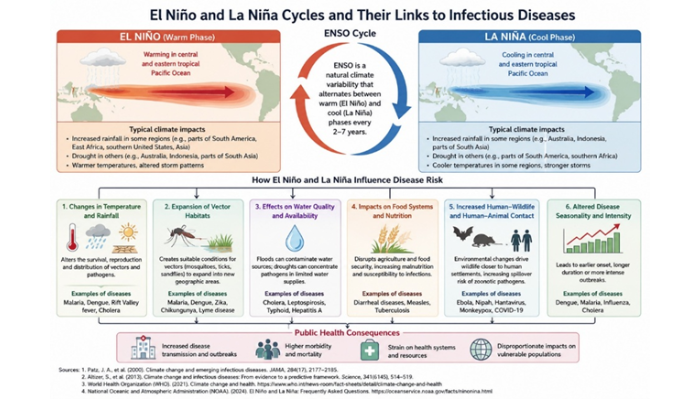
Climate change is no longer just an environmental concern; it is a reality, supported by empirical studies and data. The last cohort, 2023-2025, stands out as the warmest in the last two decades. Warming is attributed to carbon dioxide and other greenhouse gas emissions that trap the heat. With rising temperatures, the melting of glaciers, floods, inundation, and erratic weather phenomena are also being witnessed. These changes are increasingly affecting biodiversity and changing the population and ecosystem dynamics. While many vulnerable species are being pushed to the brink of extinction, others are rapidly adapting or emerging in response to these structural changes across various levels of the ecological hierarchy.
The world has also witnessed the emergence and re-emergence of several infectious diseases, including Severe Acute Respiratory Syndrome (SARS), Ebola Virus Disease (EVD), Zika virus disease and Coronavirus Disease 2019 (COVID-19). The Pandemic COVID-19 brought the world to a standstill, resulting in the death of many, a huge majority having secondary infections, and compromised immunity amongst the young and…read more on NOPR

Please bookmark the new web address.